


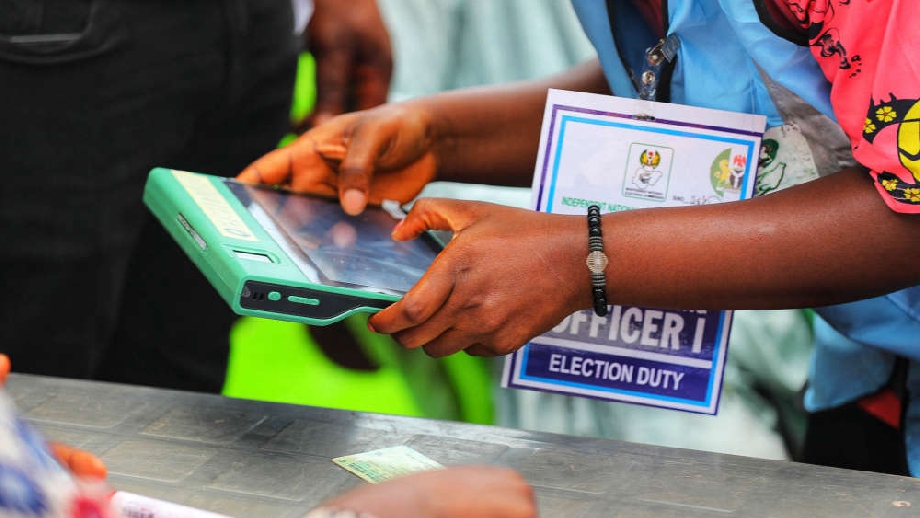
Image Source: Nigerian Info
Floods have displaced over 1.4 million and killed over 600 people in 2022. Security tensions from farmer and herdsmen conflicts have led to extreme violence, displacement, and death. Food insecurity due to irregular rainfall and droughts have inordinately affected many citizens. With all these, it is surprising why the Nigerian 2023 polls are not prioritizing environmental sustainability.
In a country saddled with many economic, social and political challenges, an average Nigerian is likely to vote for the candidate that puts economic stability and security in their campaign plans over environmental sustainability which has been otherwise perceived as a ‘second-class’ issue.
Environmental sustainability cannot take a backseat because human health and wellbeing are linked to the state of the environment. The 2022 floods brought in its wake destruction of lives and property, destruction of food crops and exposure to diseases and infections. A healthy environment provides basic needs for human existence like clean air and water, fertile land for food production and improved quality of life. Without these the foundation for sustainable development is missing.
The executive branch of government is responsible for developing and enforcing policies for sustainable development, and It is known that a sustainable environment is a requirement for other sustainability indices like social, economic, and environmental sustainability.
What the aspirants are saying
A presidential town hall organized by civil society groups; HOMEF, Corporate Accountability and Public Participation Africa (CAPPA), and We The People, gave the environmental and climate justice community and Nigerians access to plans and policies of the political parties on the environmental/climate crisis troubling Nigeria.
The presidential candidates of ADC, SDP, NNPP, and AAC were present to share their plans and answer questions from stakeholders. Their plans included addressing poverty to work on environmental sustainability, energy transition plans, and reducing fossil fuels dependence.
The presidential candidates of the leading parties at the elections, APC, PDP, and LP were absent but a deep dive into their plans showed the following;
- In his plan, Bola Ahmed Tinubu, the Presidential candidate of the All Progressive Congress, APC, wants to accelerate the implementation of the Nigerian Gas Master Plan and fully develop and modernize Nigeria’s regulatory framework for natural gas production.
- The PDP Presidential candidate, Atiku Abubakar plans to pay special attention to the global energy transition. He intends to incentivize investors to tap the unexploited resources in the mature Niger Delta basin and develop their assets.
- Peter Obi, the Labour Party Presidential candidate, promised to identify opportunities and tap into the $3 trillion international climate finance. He intends to fast-track the Nigerian Gas Flare Commercialization Programme to contain gas flaring and increase gas utilization.
What Nigerians should be asking for?
Nigeria, though one of the lowest contributors to climate change, has witnessed devastating consequences from its impact in recent years. Climate change effects like droughts in parts of Northern Nigeria, floods across the country, and irregular rainfall patterns.
In 2022, Nigeria experienced one of its worst floods in history, recording losses of $6.68 billion. It was evident that adaptation and mitigation of the crisis were slow and uncoordinated. Nigerians should ask how these politicians intend to build systems that reduce the effects of this crisis on Nigerians and Nigeria.
Nigeria has several environmental laws such as the Climate Change Act, Harmful Waste Act, Endangered Species Act, and Water Resources Act, but the slow implementation of these laws has contributed to environmental degradation in Nigeria. Nigerians should ask how these politicians intend to implement/reform laws set by their predecessors to protect the environment and our well-being.
2% of Federal earnings are set aside yearly to solve serious ecological problems. This special fund is known as The Ecological Fund. This fund is meant to solve ecological problems like soil erosion, flooding, droughts, desertification, oil spillage, general environmental pollution, storms, and landslides, and prevent suffering and death from these natural disasters. Nigerians should ask these aspirants how transparent they would be in ensuring that these funds are used for the purpose intended.
At COP26, Nigeria made commitments to net zero emissions by 2060. Energy transition plans have been made and funding is being sourced. Some of the aspirants have made bold statements on the energy transition plan, the question Nigerians should be asking is how they intend to make good on their promises and how they would fund these lofty projects.
Conclusion
The time for climate action and holding our leaders/aspiring leaders accountable for environmental degradation is now. Environmental sustainability or climate change cannot afford to take a backseat anymore if we are serious about making sustainable progress as a country.
In order to live up to their commitments, the cornerstones of their governance should be effective governance, policy execution, accountability and transparency, legislation, and enforcement.
It is not enough to only hold the executive accountable for environmental decadence, the legislative has the sole power to amend, and approve environmental budgets and influence environmental policy. As Nigerians go to the polls, the need for climate-educated and eco-conscious political officeholders could help or mar Nigeria’s sustainable future.
Joan Bishio* is the Junior Associate, Knowledge and Web Management, at Clean Technology Hub.