


According to the Environmental Protection Agency of the United States, climate change is defined as “any significant change in the measures of climate lasting for an extended period of time. In other words, climate change includes major changes in temperature, precipitation, or wind patterns, among other effects, that occur over several decades or longer.”
Reflective from this definition are the obvious experiences in the earth in terms of the changes occurring to the extended weather and climate patterns due to significantly rising global temperatures. The earth’s temperature in the last century has experienced a quantum leap in figures relating to 1.5°F and a projection for an increase.
The impact of climate change is crystal clear as there have been recent occurrences that have solidified its impact through droughts, intense rainfall, heat waves and floods. In the month of July, major rainfalls were experienced in Lagos, Nigeria, causing flooding in certain parts of the state and paralyzing economic activities. The yearly valuation of the impact of flooding on the economy of the state according to CNN is at an annual value of $4 billion. Similar events occurred in the United Kingdom, Belgium, Luxembourg, Netherlands and western Germany between the 12th to 15th of July 2021. The bottom line of this alludes to the fact that the effects of climate change are here.
To avert these impending dangers that are consequential of the phenomenon, man must begin to proactively address the causes of climate change which has been majorly attributed to anthropogenic activities with energy ranking the highest with two-thirds of the global carbon emissions coming from the sector (IEA, 2020).
There has been a significant rise in temperatures on which last year had the hottest of Septembers. This is an obvious example of the mounting greenhouse gas emissions that have been identified to be majorly anthropogenic (IEA, 2020). There is growing warmth of the globe with high flying carbon dioxide emission; therefore, a way to curb this environmental menace has become a critical topic of discussion in major energy circles. The discussion has not just been on reducing the amount of carbon emissions but also removing the ones that are already there.
In 2018, the Intergovernmental Panel on Climate Change (IPCC) declared that there would be a need for an about 45% decrease in anthropogenic carbon emission by 2030 if global warming would be limited to 2°C. This means that there has to be solutions of not just limiting emission, but also removing emissions from the atmosphere. This is where carbon capture and storage (CCS) technology comes in, offering the potential of helping man preserve his environment and keeping the natural process of the greenhouse effect go on smoothly.
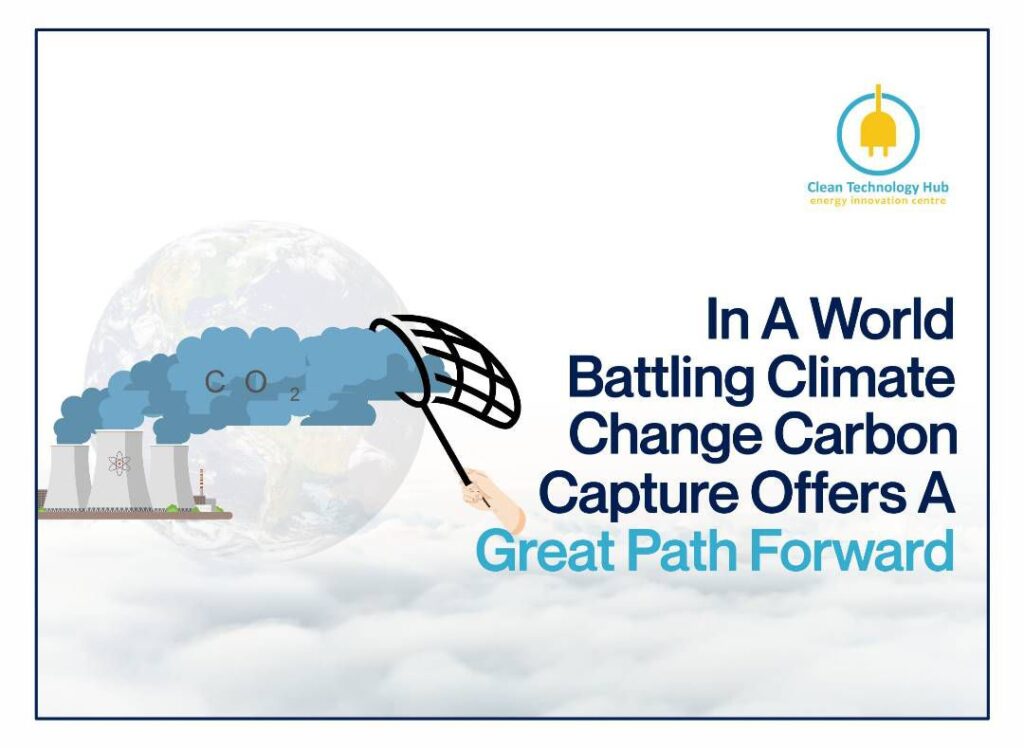
One major technology, as identified by the IEA towards attaining the desired climate change mitigation level in the world is carbon capture, storage and sequestration. The benefits of the yet to be commercially viable technology goes beyond the shores of climate mitigation to providing carbon as a resource in the production of chemicals. The necessity for CCS technology has been made a matter of urgency, considering the fact climate change is already here. It is an advanced technology that absorbs carbon emissions that are generated during industrial activities like the production of steel and cement and a major emitting point from power generation through fossil energy sources. The carbon collected can then be either stored in geological formations deep underneath the ground. Other usages have been found for this carbon as it can be re-used in enhanced oil recovery and the manufacture of building materials and fuels. In a research report by the Science for Environment Policy, the benefits from health sector, a reduction in carbon emissions could impact the health, relieving the sector of health damages from pulverized coal plants by 74%, a 68% reduction by emissions from coal-based integrated gasification combined cycle and 68% from the natural gas combined cycle power plants.
There have been success stories of CCS in the world with the Sleipner facility in Norway seen as a major success of the technology as it has been in operation since 1996, capturing an average of 0.9 million tonnes of carbon per year. Other facilities that have been functional include the century plant in West Texas (USA), the Shute Creek Gas processing plant in Wyoming (USA) and the Boundary Dam Carbon and Storage (CCS) project Saskatchewan (Canada) amongst a host of others.
The effect of climate change is trans-boundary and therefore means that a collective effort must be harnessed to reach the set target of carbon emission reduction. For this to be achieved, African nations, though not ranking high on the index of carbon emitting continents with just 2–3% of carbon emissions coming from there, will need to look into adopting these technologies, going by the high rate of vulnerability that the populace thereof have to the effects of climate change.
In a local context, a more traditional approach to carbon removal will be to plant more trees. An estimated 40 billion tons of CO2 which gets into the atmosphere annually causes a rapid increase in the earth’s temperature that can be reduced drastically through tree planting. CO2meter also stated in a report that it will take a typical hardwood tree an approximate of 40 years for it to remove 1 ton of carbon from the atmosphere. This may seem small but if the world will have more trees planted, we will have more carbon naturally sequestered.